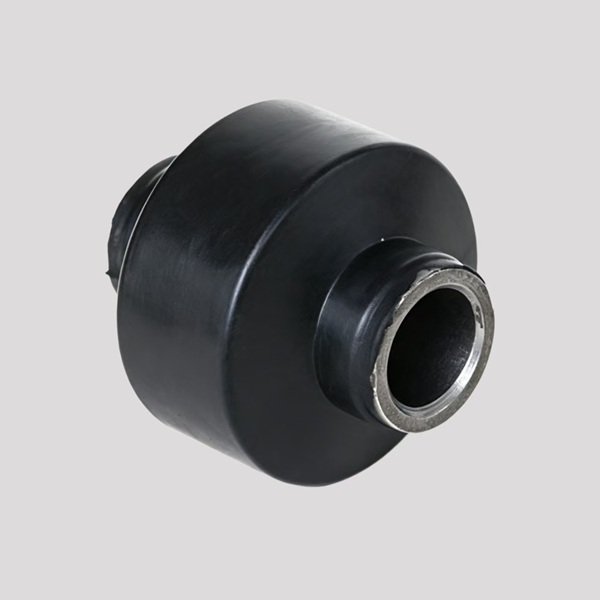
Item No. AVM-024
Metal-to-metal contact between moving parts is a design failure waiting to happen. Every impact, every vibration cycle, every tiny movement grinds surfaces, loosens fasteners, and transmits noise through the entire structure. A rubber buffer sits between those parts and absorbs all of it — cushioning impact, isolating vibration, and keeping components in controlled alignment.
What separates a good buffer from a bad one is what happens after the millionth cycle. Hardened, cracked, flattened rubber no longer absorbs anything; it just passes vibration straight through. Our buffers are engineered to stay soft, elastic, and dimensionally stable through years of continuous mechanical stress — whether installed on a passenger car suspension, a heavy excavator, or a precision industrial machine.
Energy-absorbing rubber compounds – natural rubber, NBR, EPDM, silicone, and custom blends
Tunable stiffness – 40 to 90 Shore A, matched to load and frequency
Bonded metal inserts – for rigid mounting and dimensional stability
Multiple attachment designs – stud, bolt-through, plate, flange, and adhesive
Superior fatigue resistance – withstands repeated cyclic loading without failure
Bonded metal inserts available – ensures secure fit and dimensional stability
Wide hardness range – 40 Shore A to 90 Shore A to suit different load requirements
Weather & chemical resistant – grade-dependent resistance to oil, heat, ozone, and moisture
Precision molded – tight tolerances for exact fit and reliable performance
Customizable – size, shape, hardness, material, and mounting options available
Superior Vibration Isolation – Effectively dampens and isolates mechanical vibrations, preventing their transmission to surrounding structures and improving overall system performance.
Significant Noise Reduction – Separates structure-borne noise, creating quieter operation environments for vehicles, machinery, and equipment.
Enhanced Component Protection – By absorbing shock loads and impact forces, buffers shield pins, bolts, brackets, and other hardware from premature wear and fatigue failure.
Extended Equipment Lifespan – Reduces mechanical stress on connected components, minimizing breakdowns, repairs, and downtime while significantly extending service intervals.
Automotive suspension systems – control arms, sway bars, stabilizer links, bump stops
Steering systems – rack and pinion mounts, steering column isolators
Engine & transmission mounts – powertrain vibration isolation
Industrial machinery – motor mounts, pump isolators, compressor buffers
Agricultural equipment – tractor linkages, implement pivots
Construction machinery – excavator joints, loader arm buffers
Railway & mass transit – suspension and coupling buffers
Materials
NR, Neoprene
Hardness
35-85ShA
Metal
Zinc plated, stainless steel
Color
Black
Applications
Engineering services, industrial OEM, Military/Aerospace, Cooling systems, etc.
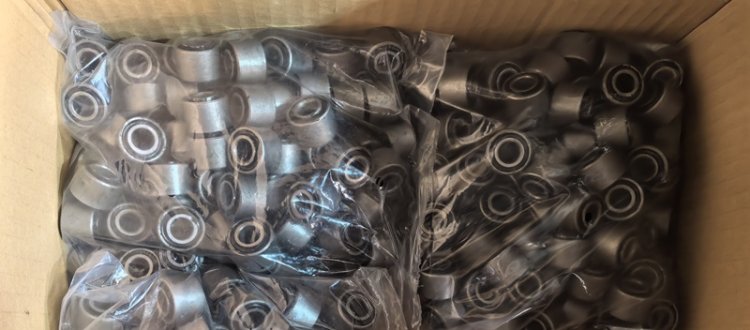
Standard: Goods are typically supplied in about 20-25kg/carton.
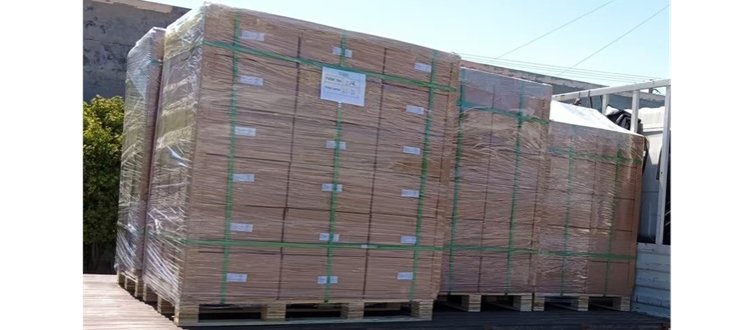
Standardized Pallets: Goods are stacked on heat-treated (ISPM 15) or plastic pallets, optimized for forklift handling. Rigid Corner Protectors: High-impact cardboard corner guards are applied to the full height of the stack. This prevents the straps from cutting into the rubber and maintains the vertical integrity of the pallet.
How do I select the right buffer for my equipment?
Key factors are equipment weight, vibration frequency, mounting space, and operating environment. Share these details and we will recommend a hardness, geometry, and mounting style.
Can I use one buffer type across different machines?
Possible but rarely optimal. Vibration frequency and load vary by machine, and a buffer tuned for one application may be too stiff or too soft for another.
How do metal inserts affect performance?
Metal inserts prevent the buffer from deforming at the mounting point, maintaining consistent performance under load. They are recommended for bolt-mounted applications.
What causes a rubber buffer to fail prematurely?
Common causes are wrong hardness for the load, chemical exposure incompatible with the compound, excessive heat, or mounting hardware that has loosened. Each can be diagnosed from the failed part.
Are these buffers oil and chemical resistant?
NBR and specialty compounds offer excellent oil, grease, and fuel resistance. EPDM is ideal for water, brake fluid, and outdoor exposure. Please consult our team for specific chemical compatibility.
Are your buffers suitable for off-road vehicles?
Yes. We offer heavy-duty compounds designed to withstand the extreme conditions of off-road and agricultural applications.
What quality standards do you meet?
All products are manufactured under ISO 9001 quality management systems. Material certifications and test reports are available upon request.
If you have any questions or needs about the product, please fill in the following form and we wll contact you as soon as possible.
PHONE: +86 0532 8769 9025
EMAIL: sales@todorubber.com
Located in Jimo
Located in Xinhe


