Item No. RB-014
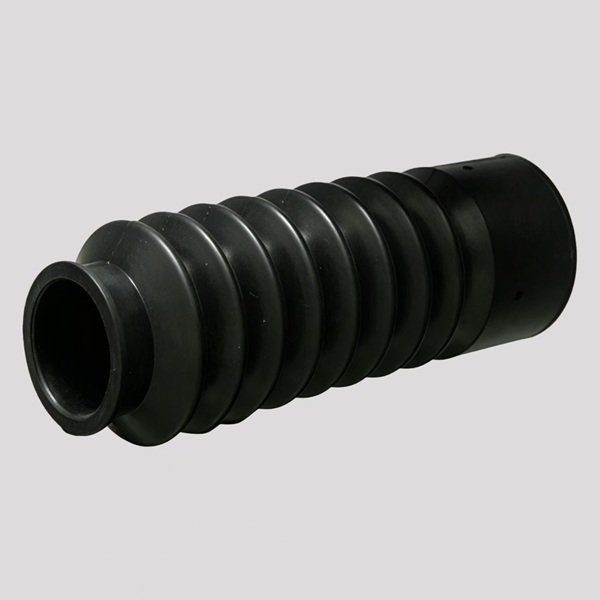
Anything that moves needs a way to move freely without letting the outside world in. That is the problem rubber bellows solve. A pleated rubber sleeve wraps around a shaft, joint, or linkage, flexing as the part moves while sealing out dust, water, oil, and whatever else the environment throws at it.
The corrugated wall is the key. Each fold acts like a hinge, allowing the bellows to stretch, compress, bend, and twist without tearing or losing its seal. The result is a component that protects precision parts, absorbs vibration, and keeps equipment running in conditions where an open joint would fail quickly. We manufacture bellows to customer drawings and samples, in a range of rubber compounds suited to different temperatures, chemicals, and outdoor exposure.
Pleated corrugated wall – flexes through expansion, compression, bending, and twisting
Seals out contaminants – blocks dust, moisture, oil, chemicals, and UV radiation
Vibration and noise damping – absorbs movement energy before it reaches surrounding structures
Material range – EPDM, silicone, FKM, NBR, CR, and NR for different service conditions
Hardness options – 30 to 80 Shore A, from soft and highly flexible to firm and structural
Wall thickness control – tuned to balance flexibility against pressure and wear resistance
Custom corrugation profiles – fold count, depth, and pitch designed around your movement envelope
OEM colors – standard black or matched to your equipment
Made to drawing or sample – any diameter, length, and profile
Consistent molding – repeatable wall thickness and fold geometry batch to batch
Movement Without Exposure – The pleated wall lets the part move freely while keeping dust, water, and oil away from precision surfaces. Seals and bearings last longer as a result.
One Part, Four Motions – Expansion, compression, bending, and twisting are all handled by the same corrugated structure, so you do not need separate components for each direction of movement.
Damping Built In– Rubber absorbs vibration and impact energy as it flexes, reducing noise and protecting surrounding structures from repeated shock loads.
Compound Matched to the Environment – EPDM for outdoor and water contact, FKM for aggressive chemicals and heat, NBR for oils, silicone for extreme temperatures. The material is selected to survive the service, not just the installation.
Automotive driveline – CV joint boots, steering rack boots, shock absorber covers
Industrial automation – linear actuator protection, robot arm covers, guide rail bellows
Hydraulic and pneumatic cylinders – rod boots, piston protection, valve stem covers
Marine propulsion – propeller shaft bellows, steering cable boots
Medical and laboratory equipment – flexible couplings, instrument protection
Material
EPDM, SBR, NR. NBR, CR, Silicone, Viton
Hardness
30 ShA – 80 ShA.
Color
OEM colors according to RAL or Pantone No.
Size
OEM sizes according to customer’s requirement.
Logo
Customized logo according to customer’s need.
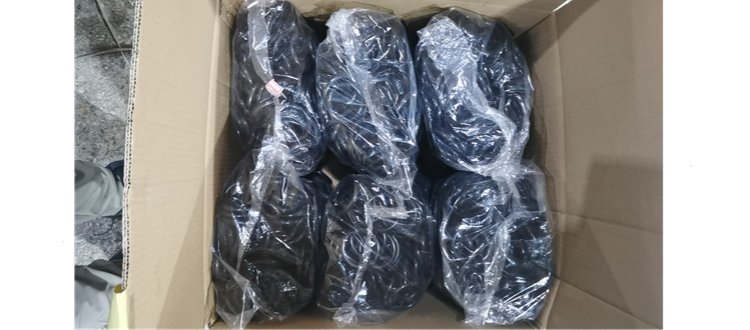
Standard: Goods are typically supplied in about 20-25kg/carton.
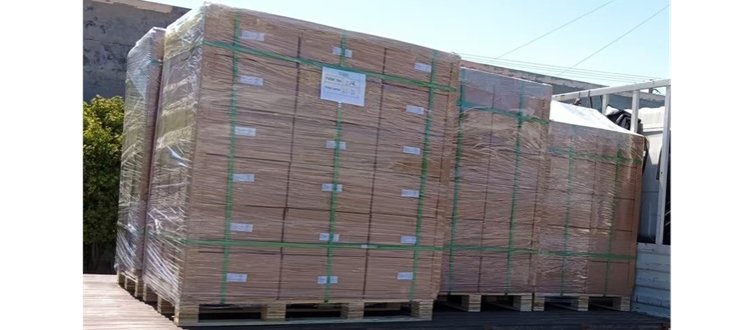
Standardized Pallets: Goods are stacked on heat-treated (ISPM 15) or plastic pallets, optimized for forklift handling. Rigid Corner Protectors: High-impact cardboard corner guards are applied to the full height of the stack. This prevents the straps from cutting into the rubber and maintains the vertical integrity of the pallet.
How do I specify the right number of folds for my application?
Fold count depends on the stroke length and the amount of bending or twisting the bellows must accommodate. Share your movement envelope and we will recommend a corrugation profile.
Can the bellows handle both axial movement and side load?
Yes, within limits. The corrugated wall flexes in multiple directions, but excessive side load can cause uneven wear. Tell us the movement pattern and we will select the wall thickness and fold geometry accordingly.
Which compound should I choose for outdoor use?
EPDM is the standard choice for outdoor exposure — it resists UV, ozone, and weather far better than NBR or natural rubber.
What if the bellows will be exposed to oils or fuels?
NBR offers good oil and fuel resistance. FKM is used where both chemical resistance and high temperature are required.
Can you produce bellows with a specific wall thickness?
Yes. Wall thickness is specified during tooling and affects both flexibility and pressure resistance. Tell us the operating conditions and we will recommend a thickness.
How are the bellows secured to the equipment?
Most bellows are secured with hose clamps, collar rings, or cable ties at each end. The attachment method depends on the shaft or housing geometry.
Can you produce low volumes for testing?
Yes. Prototype and sample quantities are available before production runs.
What is the typical lead time?
Existing profiles typically ship within 10–15 working days. New tooling generally adds 15–25 working days.
Can the bellows be supplied with custom colors?
Yes. Standard color is black; custom colors are available to match equipment or branding requirements.
Do you supply other rubber molded parts alongside bellows?
Yes. Rubber gaskets, grommets, washers, seals, silicone molded products, boat rollers, and dock bumpers are all part of our range.
If you have any questions or needs about the product, please fill in the following form and we wll contact you as soon as possible.
PHONE: +86 0532 8769 9025
EMAIL: sales@todorubber.com
Located in Jimo
Located in Xinhe


