
Modern electronic devices—spanning consumer wearables, outdoor telecommunications enclosures, EV battery modules, and industrial control panels—are becoming smaller, more powerful, and increasingly deployed in demanding environments.
When sourcing rubber molded parts for the electronics industry, engineers and procurement specialists must evaluate environmental ingress ratings, dielectric or conductive properties, micro-molding tolerances, and regulatory compliance.
Why Custom Rubber Components Are Essential in Modern Electronics
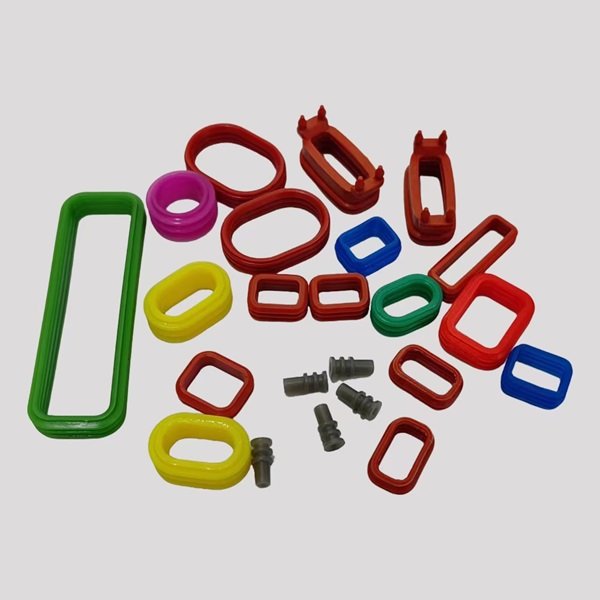
Off-the-shelf seals rarely accommodate the compact footprints, thin wall sections, and complex housing geometries of contemporary hardware. Custom-molded rubber components are engineered to fit exact enclosure grooves and interface tolerances, delivering critical operational advantages.
Common Rubber Molded Products Used in Electronic Devices
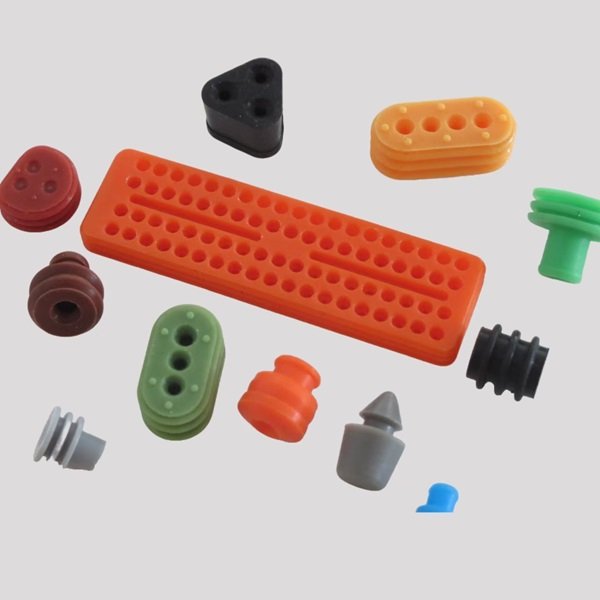
3.Different electronic assemblies require specialized rubber geometries tailored to both protective and user-interface functions:
Grommets and Bushings:
Vibration Mounts and Dampeners:
Keypads and Buttons: Provide tactile feedback, backlighting diffusion, and moisture sealing for remote controls, medical instruments, industrial control panels, and rugged handheld devices.
Boots and Bellows: Act as flexible, dynamic protective covers for toggle switches, joysticks, sensors, and moving internal actuators.
Selecting the Right Elastomer Material for Electronics
Selecting the optimal rubber compound depends on operating temperatures, environmental exposure, and electrical requirements.
| Elastomer Material | Common Trade Names | Primary Strengths in Electronics | Typical Limitations |
| Silicone & Fluorosilicone (VMQ / FVMQ) | Silastic, Elastosil | Wide temperature stability (-60°C to +230°C); superior electrical insulation; UV/ozone resistance; easily pigmented or made electrically conductive. | Lower tear and abrasion resistance than organic rubbers; standard silicone swells in hydrocarbon fuels (use FVMQ for fuel/solvent exposure). |
| EPDM | Nordel, Vistalon | Exceptional resistance to outdoor weathering, UV, ozone, steam, and moisture; cost-effective for exterior enclosures. | Poor resistance to petroleum oils, greases, and hydrocarbon solvents. |
| Nitrile Rubber (NBR) | Buna-N | Strong resistance to oils, greases, and mechanical abrasion; economical for indoor industrial hardware. | Poor resistance to UV light, ozone, and prolonged outdoor weather exposure. |
| Neoprene & Fluoroelastomer (CR / FKM) | Baypren, Viton | Neoprene: Good flame retardancy, toughness, and moderate oil/weather resistance. FKM: Superior high-heat stability and aggressive chemical resistance. | Neoprene: Moderate temperature ceiling (~100°C). FKM: Higher material cost; lower low-temperature flexibility. |
What Drives the Cost of Custom Electronics Rubber Molding?
Understanding key cost variables helps engineering and sourcing teams balance unit price with long-term device reliability:
Compound Formulation: Specialty grades—such as UL 94 V-0 flame-retardant silicone, fluorosilicone, FKM, or conductive EMI elastomers—carry higher raw material costs than standard NBR or EPDM.
Part Geometry & Micro-Tolerances: Complex undercuts, overmolded metal/plastic inserts, and tight flash-free tolerances require more intricate tooling.
Mold Cavitation & Order Volume: Multi-cavity production molds increase upfront tooling investment but significantly reduce per-piece costs at high production volumes.
Secondary Operations & Cleanliness: Post-curing (to eliminate volatile outgassing near sensitive optics or contacts), laser etching for keypads, adhesive backing application, and cleanroom packaging add to unit pricing.
For engineering guidance, elastomer selection support, and custom molding quotes tailored to your electronic hardware, contact Airex Rubber to discuss your project specifications.
Frequently Asked Questions (FAQ)
1. Why is post-curing important for silicone parts used in electronics?
Post-curing heats molded silicone parts in an oven after primary vulcanization to drive off residual volatile compounds (siloxanes). This prevents outgassing that could otherwise condense on optical lenses, display screens, or low-voltage electrical contacts and cause circuit failure.
2. What is the difference between compression molding and LSR injection molding for electronics?
Compression molding is cost-effective for medium-volume production, larger gaskets, and vibration mounts.
3. How do rubber gaskets provide EMI shielding for electronics?
Standard rubber is an electrical insulator. To provide electromagnetic interference (EMI) shielding, manufacturers blend conductive particles—such as nickel-graphite, silver-copper, or carbon—into a silicone or fluorosilicone base, creating a flexible seal that blocks both environmental ingress and electromagnetic noise.
4. Which rubber material is best for waterproof (IP67/IP68) electronics enclosures?
Silicone and EPDM are the top choices for waterproof enclosures. Silicone excels in applications requiring extreme temperature resistance and low closure force, while EPDM offers an economical, durable barrier for outdoor enclosures exposed to UV, ozone, and rain.