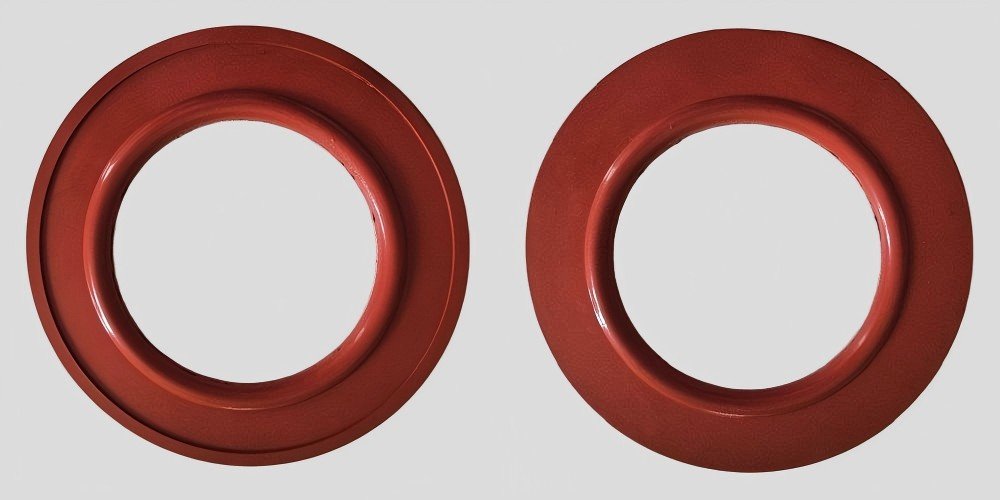

FKM Molded Parts-High-Performance Sealing Solutions
FKM molded parts are specialized sealing components made from fluoroelastomer (FKM) material, renowned for their exceptional resistance to heat, chemicals, and wear. These components are widely used in industries such as automotive, aerospace, chemical processing, and oil and gas—sectors where equipment requires reliable sealing under extreme operating conditions. Thanks to the unique properties of FKM, these molded parts are ideally suited for environments where conventional elastomeric materials might fail, ensuring long-lasting performance and operational safety.
Understanding FKM Material
FKM, also known as fluoroelastomer or fluorine rubber, is a high-performance synthetic rubber widely recognized for its exceptional resistance to heat, oils, fuels, solvents and corrosive chemicals. Viton® is a well-known registered brand name for FKM compounds produced by DuPont.
Key Properties
High temperature resistance : Standard FKM works continuously from -20°C to 200°C. Special formulated grades can withstand peaks up to 250°C.
Superior fluid resistance : Excellent compatibility with engine oil, transmission fluid, gasoline, diesel, hydraulic oil, aliphatic and aromatic hydrocarbons.
Outstanding ageing performance : Strong resistance to ozone, UV light and weathering. It hardly hardens or cracks under long-term outdoor exposure.
Low compression set : Retains good elasticity and sealing force after prolonged compression, critical for static and dynamic sealing.
Good flame resistance and low gas permeability : Suitable for vacuum and high-pressure working scenarios.
Manufacturing Process of FKM molded parts
FKM molded parts are mainly produced by compression molding, the most common and reliable process for custom fluoroelastomer components. Below is our standard production workflow.
1. Compound Preparation & Mixing : Raw FKM polymer is blended with curing agents, fillers, plasticizers and additives according to the target formula. Mixing is precisely controlled to achieve required hardness, heat resistance, chemical resistance and compression set performance. Batch testing is carried out to verify material properties before molding.
2. Preforming : The mixed FKM stock is cut and pre-shaped into blanks (preforms). The weight and size of each preform are calculated carefully to match the cavity volume of the mold, avoiding underfill or flash excess during pressing.
3. Mold Loading & Compression Molding : Preforms are placed into heated steel mold cavities. The mold is closed under high pressure at a set temperature. Heat and pressure trigger cross-linking (vulcanization), turning the soft FKM compound into a solid, elastic finished shape. This is the primary curing stage.
4. Demolding & Deflashing : Once primary curing is finished, parts are taken out from the mold. Excess rubber flash around edges is removed by manual trimming, tumbling, cryogenic deflashing or grinding, depending on part size, geometry and tolerance requirements.
5. Post-Curing (Oven Bake) : Most FKM parts require a secondary post-cure in a hot air oven. Post-curing releases volatile by-products from vulcanization, improves compression set, enhances thermal stability and reduces outgassing. This step is critical for high-performance sealing applications.
6. Inspection & Quality Control : Finished parts go through visual inspection, dimension check, hardness testing and sample performance testing. We verify dimensions, surface condition, elasticity and sealing-related indicators. Non-conforming items are sorted out. Material certificates, RoHS, REACH, FDA or PFAS-Free declarations can be issued as requested.
7. Packing & Shipment : Qualified FKM molded parts are cleaned and packed to prevent contamination, scratching and deformation, ready for delivery.