
Silicone rubber extrusion is a widely used manufacturing process for producing continuous silicone products with specific cross-sectional shapes and dimensions. From silicone rubber seals and gaskets to tubing, cords, and custom profiles, extrusion allows manufacturers to create flexible, durable, and high-performance components for various industrial applications.
Compared with other rubber manufacturing methods, silicone extrusion is particularly suitable for producing long, continuous products with consistent cross-sectional designs. By combining carefully formulated silicone compounds, precision-engineered extrusion dies, and controlled curing systems, manufacturers can produce silicone profiles that meet different performance and application requirements.
But how does the silicone rubber extrusion process work? What materials and equipment are involved? And what steps are required to turn raw silicone compounds into finished products?
In this guide, Qingdao Todo Rubber explains the complete silicone extrusion process, from material preparation and die design to extrusion, curing, finishing, and quality inspection.
What Is the Silicone Rubber Extrusion Process?
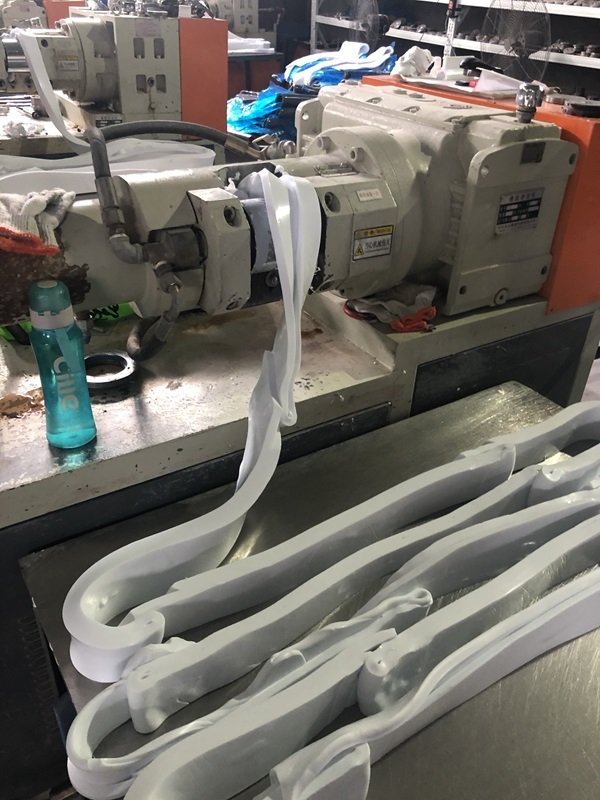
Silicone rubber extrusion is a continuous manufacturing process in which uncured silicone rubber compound is forced through a specially designed die to create a product with a specific cross-sectional shape.
Unlike thermoplastic extrusion, silicone rubber extrusion generally involves a curing or vulcanization stage after the material passes through the die. This process creates a cross-linked rubber structure, giving the finished product its required elasticity, mechanical strength, dimensional stability, and temperature resistance.
The main equipment used in this process is called a silicone rubber extruder. It typically consists of a feeding system, screw, barrel, extrusion head, and custom-designed die.
During production, the silicone compound is fed into the extruder and transported forward by a rotating screw. Pressure and controlled temperature help the material flow through the die, where it takes on the desired shape. The newly formed profile then passes through a curing system to develop its final rubber properties.
Silicone rubber extrusion is commonly used to manufacture:
Silicone rubber sealing strips
Silicone rubber tubes and hoses
Silicone rubber gaskets
Solid and sponge silicone profiles
Silicone cords and strips
Custom silicone rubber extrusions
Industrial silicone sealing components
Because of its production efficiency and design flexibility, silicone extrusion is an ideal solution for applications requiring continuous lengths, consistent profiles, and customized dimensions.
How Are Silicone Extrusion Profiles Made?
The silicone rubber extrusion process involves several important manufacturing stages. Each step affects the appearance, dimensions, and performance of the finished silicone product.
Below is a detailed explanation of the eight main steps.
Step 1: Material Selection and Preparation
Material preparation is the foundation of high-quality silicone rubber extrusion.
Before production begins, manufacturers must select the appropriate silicone rubber compound according to the product's intended application and performance requirements.
High-consistency rubber (HCR), also known as solid silicone rubber, is commonly used for continuous silicone extrusion. The compound can be formulated to achieve different levels of hardness, elasticity, tensile strength, tear resistance, and temperature resistance.
Depending on the application, manufacturers may also consider:
Silicone rubber hardness
Operating temperature range
Tensile and tear strength
Compression set resistance
Chemical resistance
Electrical insulation properties
Food-contact or other regulatory requirements
In addition to selecting the right material, manufacturers need to prepare the extrusion equipment and tooling.
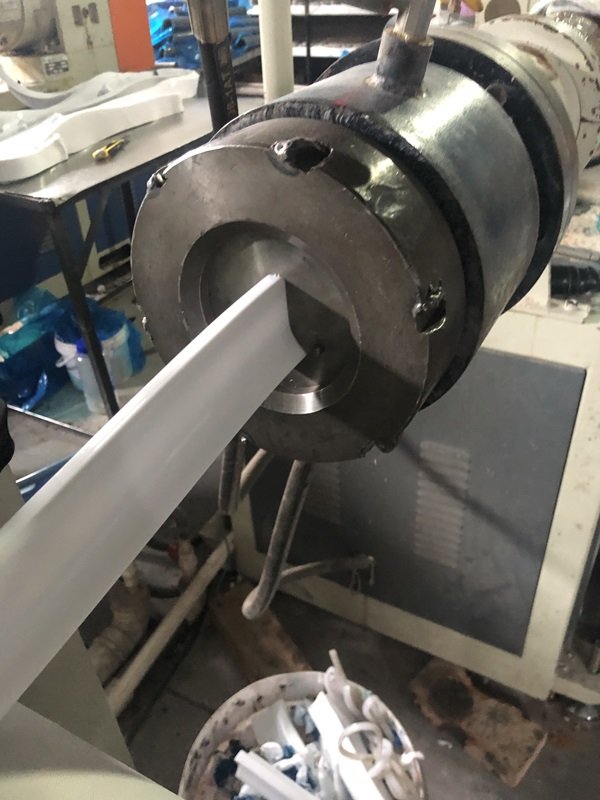
The extrusion die is particularly important because it determines the cross-sectional shape and dimensions of the finished profile. Custom dies are generally manufactured from suitable tool steel and must be designed with appropriate flow characteristics to ensure consistent material distribution.
Before production, the equipment, feeding system, and extrusion tooling should also be inspected and cleaned to minimize contamination and production defects.
Step 2: Silicone Rubber Mixing and Compounding
After selecting the silicone material, the next step is mixing and compounding.
Silicone rubber compounds may contain several ingredients designed to achieve the required product characteristics. These can include silicone polymers, reinforcing fillers, curing agents, pigments, and other functional additives.
Each ingredient serves a specific purpose:
Reinforcing fillers: Improve mechanical strength and other physical properties.
Color pigments: Provide different colors according to customer requirements.
Curing agents: Help initiate the vulcanization process.
Functional additives: Adjust specific characteristics such as flame resistance or processing performance.
The ingredients are mixed using specialized rubber processing equipment, such as mills or internal mixers, depending on the compound formulation and production requirements.
The objective is to achieve a homogeneous silicone compound with consistent properties throughout the material.
Proper compounding is essential because variations in material composition can affect extrusion stability, curing behavior, product appearance, and final performance.
Step 3: Extruder Setup and Die Installation
Once the silicone compound is ready, the extrusion production line must be configured.
A typical silicone rubber extruder includes several major components:
Feeding system: Supplies the silicone compound to the extruder.
Screw: Moves and compresses the material toward the extrusion head.
Barrel: Houses the screw and controls the material's movement.
Extrusion head: Directs the compound toward the die.
Extrusion die: Shapes the silicone compound into the required profile.
At this stage, manufacturers install the appropriate die according to the product drawings or technical specifications.
The production team also adjusts important processing parameters, including screw speed, material feed rate, extrusion pressure, and temperature.
These settings must be coordinated carefully to maintain stable material flow and achieve the required cross-sectional dimensions.
For custom silicone extrusion projects, die design and machine setup are particularly important because even small variations in the production process can affect the final profile.
Step 4: Silicone Rubber Extrusion and Profile Forming
This is the main forming stage of the silicone rubber extrusion process.
The prepared silicone compound is continuously fed into the extruder through the feeding system. A rotating screw transports the material through the barrel and pushes it toward the extrusion head.
As the compound reaches the die, pressure forces it through the specially designed opening.
The silicone material then emerges as a continuous profile with the required cross-sectional shape.
Depending on the product design, the extrusion die can produce different shapes, including:
Round and square profiles
U-shaped and D-shaped seals
P-shaped and E-shaped sealing strips
Hollow silicone tubes
Rectangular and custom-shaped profiles
Multi-channel and complex cross-sections
During extrusion, manufacturers must maintain stable feeding, pressure, screw speed, and material temperature.
Another important consideration is die swell, which refers to the tendency of rubber material to expand after leaving the die. Manufacturers must account for this behavior when designing the tooling and adjusting production parameters.
It is important to understand that silicone rubber does not simply melt like ordinary thermoplastic materials. The uncured compound is shaped through the extrusion die and subsequently cured through a controlled vulcanization process.
Step 5: Vulcanization and Curing
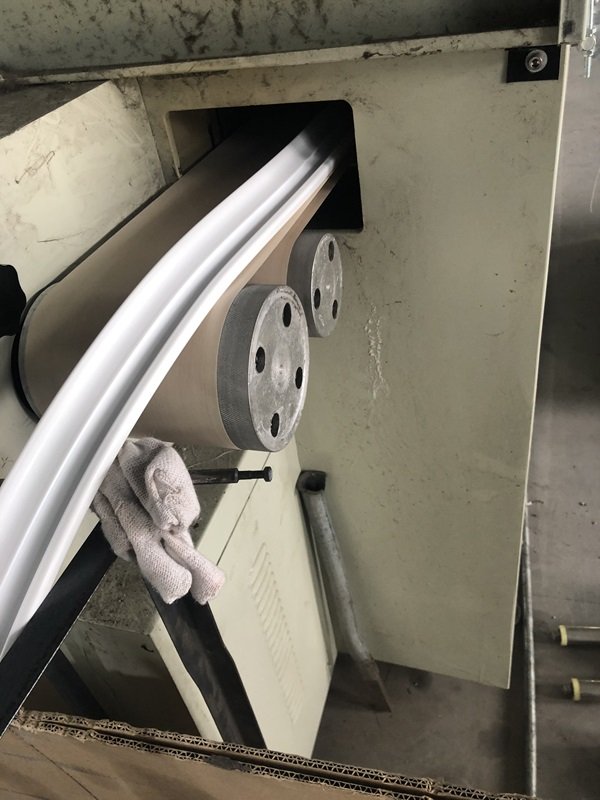
After leaving the extrusion die, the silicone profile is generally still uncured. It must undergo vulcanization to develop its final physical and mechanical properties.
Vulcanization is a chemical process that creates cross-links within the silicone rubber structure. These cross-links help transform the uncured compound into an elastic, stable rubber product.
Several curing methods can be used in silicone rubber extrusion, depending on the material formulation, product dimensions, and production requirements.
Hot Air Curing
The extruded silicone profile passes through a heated oven, where controlled hot air provides the energy needed for vulcanization.
Hot air curing is widely used for continuous silicone profiles, sealing strips, and tubing.
Infrared Curing
Infrared heating provides energy to the extruded material and can be integrated into continuous curing production lines.
Microwave-Assisted Curing
Microwave systems can provide rapid internal heating and are often combined with hot air curing to improve the overall curing process.
Salt Bath Curing
In certain rubber extrusion applications, a heated salt bath provides rapid and efficient heat transfer. The suitability of this method depends on the silicone formulation and production requirements.
The curing temperature, line speed, and residence time must be carefully controlled. Insufficient curing can affect mechanical performance and dimensional stability, while excessive curing may also cause product defects.
Proper vulcanization is therefore essential for producing consistent, high-quality silicone extrusion profiles.
Step 6: Cooling and Post-Curing
After vulcanization, the silicone extrusion profile is cooled under controlled conditions.
Cooling helps stabilize the product's shape and temperature before further processing. Depending on the production line and product design, manufacturers may use air cooling or other suitable cooling systems.
Some silicone products may also require an additional post-curing process.
Post-curing is a secondary heating treatment performed after the initial vulcanization stage. It is commonly used for certain silicone formulations and applications to improve product stability and reduce residual volatile substances or curing by-products.
The need for post-curing depends on factors such as the silicone compound, curing system, product thickness, and application requirements.
For example, silicone components used in demanding industrial or specialized applications may require additional thermal treatment to meet specific performance or material requirements.
Not every extruded silicone product requires post-curing. Manufacturers should determine the appropriate process according to the material supplier's recommendations and the customer's technical specifications.
Step 7: Cutting, Finishing, and Secondary Processing
Once curing and cooling are complete, the continuous silicone profiles move to the finishing stage.
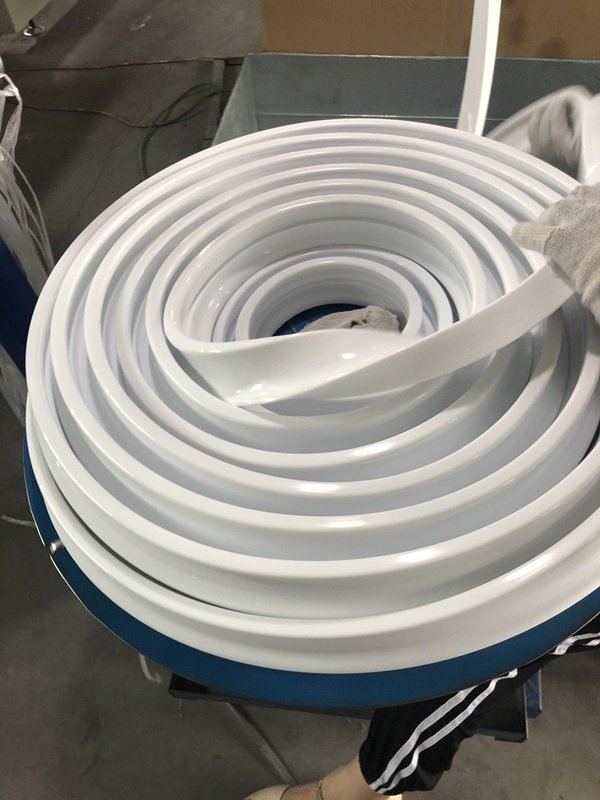
Depending on customer requirements, manufacturers can cut the extruded material into specific lengths or wind it into rolls for bulk delivery.
Common finishing and secondary processing operations include:
Precision Cutting
Automated cutting equipment can produce silicone profiles in consistent lengths according to customer drawings.
Surface Treatment
Additional surface treatments may be used to improve appearance, handling, or specific functional properties.
Trimming
Excess material and unwanted edges are removed to improve the product's final appearance and dimensional consistency.
Splicing and Joining
Certain silicone profiles can be joined to create continuous loops, sealing rings, or custom-shaped components.
Co-Extrusion
Co-extrusion combines two or more materials or compounds during one extrusion operation. It is useful for manufacturing multi-material profiles, such as silicone seals with different hardness zones or integrated sealing features.
These secondary processes allow manufacturers to provide more complete silicone extrusion solutions for different industries.
Step 8: Quality Inspection and Packaging
Quality control is essential throughout the silicone rubber extrusion process.
Before finished products are packaged and shipped, manufacturers should inspect them against the agreed technical drawings, material specifications, and quality requirements.
Common inspection and testing procedures include:
Dimensional Inspection
Measurements are taken to verify the profile's width, height, wall thickness, and other critical dimensions.
Visual Inspection
The surface is checked for cracks, bubbles, contamination, unevenness, and other visible defects.
Hardness Testing
A durometer is used to measure silicone rubber hardness and verify that the material meets the specified requirements.
Tensile and Elongation Testing
These tests evaluate the material's mechanical strength and ability to stretch before breaking.
Compression Set Testing
Compression set testing evaluates how well silicone rubber recovers after being compressed for a specified period under controlled conditions.
Additional Performance Testing
Depending on the application, testing may also include tear strength, temperature resistance, chemical compatibility, electrical insulation, and other specialized evaluations.
Relevant industry standards may include ISO 3302-1 for rubber product dimensional tolerances, as well as application-specific material and testing standards.
After inspection, qualified products are properly packed and prepared for delivery. Packaging methods may include protective bags, cartons, reels, and customized packaging according to product dimensions and transportation requirements.
What Are the Advantages of Silicone Rubber Extrusion?
Silicone rubber extrusion offers several advantages for industrial manufacturers and product designers.
1. Continuous Production Efficiency
Extrusion is particularly suitable for manufacturing long silicone profiles in continuous lengths.
It supports efficient production and helps reduce processing costs for large-volume orders.
2. Flexible Customization
With custom-designed extrusion dies, manufacturers can produce a wide range of cross-sectional shapes and dimensions.
This makes silicone extrusion suitable for specialized sealing applications and products with unique design requirements.
3. Excellent Temperature Resistance
Silicone rubber is known for its ability to maintain useful properties across a broad temperature range.
The actual operating temperature depends on the silicone formulation, product design, and working environment.
4. Excellent Flexibility and Elasticity
Silicone extrusion products can provide reliable flexibility and elastic recovery, making them suitable for sealing, cushioning, insulation, and vibration protection.
5. Good Weather and Aging Resistance
Silicone rubber generally offers good resistance to UV exposure, ozone, and environmental aging, making it suitable for many indoor and outdoor applications.
6. Wide Range of Industrial Applications
Silicone extrusion can produce products for automotive, electrical, machinery, construction, marine, medical-related, and other industrial applications, subject to the appropriate material specifications and compliance requirements.
Common Applications of Extruded Silicone Rubber Products
Silicone extrusion products are used in many industries because of their flexibility, durability, and material versatility.
Automotive Industry
Silicone rubber sealing strips, tubes, and protective profiles are used in automotive systems where temperature resistance and reliable sealing are important.
Electrical and Electronics Industry
Silicone profiles and tubing can provide electrical insulation and protection for wires, cables, and electronic components.
Industrial Machinery
Custom silicone gaskets, seals, and protective strips help prevent dust, moisture, and other contaminants from entering equipment.
Construction Industry
Silicone sealing profiles are used in doors, windows, curtain walls, and other building components.
Marine Industry
Silicone rubber profiles can be used for sealing and protective applications in marine equipment, subject to the required environmental and performance specifications.
Food Processing and Specialized Equipment
Suitable silicone compounds can be used to manufacture tubing and sealing components for applications requiring specific food-contact properties. Material compliance must be verified for the intended application.
Custom Silicone Extrusion: Why Choose a Customized Solution?
Standard silicone profiles may not always meet the requirements of specialized industrial applications.
Custom silicone extrusion allows manufacturers to develop products with specific cross-sectional shapes, dimensions, hardness levels, colors, and material properties.
For example, customers may require:
Custom silicone sealing strips for machinery.
Special-shaped silicone profiles for automotive applications.
Hollow silicone tubes with specific internal and external dimensions.
Multi-hardness silicone profiles for specialized sealing systems.
Silicone gaskets designed according to customer drawings.
Custom lengths, colors, and packaging specifications.
The custom manufacturing process generally starts with a technical drawing, product sample, or detailed application requirements.
Based on this information, engineers can evaluate the silicone material, extrusion die design, manufacturing process, and required testing procedures.
A well-designed custom extrusion solution can help improve product compatibility, sealing performance, and overall manufacturing efficiency.
How to Choose a Reliable Silicone Rubber Extrusion Manufacturer?
Selecting the right silicone extrusion manufacturer is an important part of any custom rubber product project.
Before placing an order, buyers should consider several factors.
Material Selection Capabilities
A reliable manufacturer should understand different silicone rubber compounds and be able to recommend suitable materials according to the intended application.
Custom Die Design and Manufacturing
The manufacturer should have the technical ability to develop extrusion dies based on customer drawings, dimensions, and product samples.
Production Equipment and Process Control
Stable extrusion equipment and well-controlled curing systems are important for maintaining consistent product quality.
Quality Inspection Capabilities
The manufacturer should have appropriate inspection procedures and testing capabilities to verify product dimensions and material performance.
Customization and Production Experience
Experience in manufacturing different silicone profiles can help suppliers better understand complex product requirements and provide practical manufacturing solutions.
Clear communication, reliable lead times, and consistent quality management are also important when establishing a long-term manufacturing partnership.
Custom Silicone Rubber Extrusion Solutions from Qingdao Todo Rubber
At Qingdao Todo Rubber, we understand that different industries have different requirements for silicone rubber profiles and sealing products.
Whether you need standard silicone sealing strips, custom silicone tubes, rubber gaskets, or specially designed extrusion profiles, selecting the right material and manufacturing process is essential.
Our team can work with your project drawings, product samples, or technical specifications to evaluate suitable silicone extrusion solutions.
From material selection and custom die development to profile production and finishing, we aim to provide products that meet your specific application requirements.
If you are looking for a silicone rubber extrusion manufacturer for your next project, Qingdao Todo Rubber welcomes your inquiry.
Contact Qingdao Todo Rubber Today!
Have a custom silicone extrusion project in mind? Send us your drawings, samples, or product requirements. Our team is ready to discuss your project and help you find a suitable silicone rubber extrusion solution.
Let's work together to develop silicone profiles that meet your design and application needs.