
Selecting the right foam strip material directly impacts equipment durability, maintenance cycles, and operational efficiency.
EPDM (Ethylene-Propylene-Diene Monomer) and Silicone foam strips are two of the most widely used industrial sealing materials today. While both provide excellent insulation and sealing, their performance under extreme conditions varies significantly.
EPDM vs. Silicone Foam Strips Comparison
| Feature / Metric | EPDM Foam Strips | Silicone Foam Strips |
| Operating Temperature | Standard industrial range | Extreme range (-60°C to +300°C) |
| Weather & UV Resistance | Exceptional (Passed 50 pphm/40°C/72h Ozone test) | Excellent (UV and Ozone resistant) |
| Water Absorption | Extremely low (Closed-cell structure) | Low |
| Special Properties | Lightweight, high toughness, shock absorption | Biological stability, non-toxic, food-grade safe |
| Electrical Insulation | Standard | Superior (Breakdown voltage: 20–25 KV/mm) |
| Sterilization Resistance | Moderate | High (Supports repeated steam sterilization under pressure) |
EPDM Foam Strips: The Ultimate Outdoor & Weather Seal
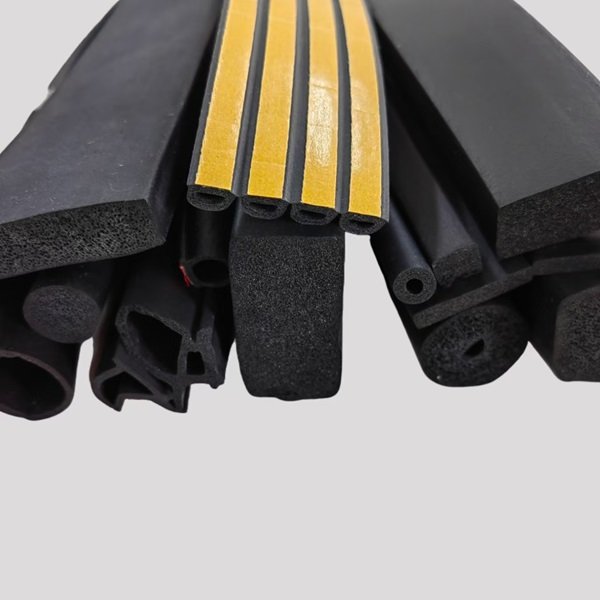
EPDM foam strips are engineered for rugged outdoor environments and mechanical sealing. Thanks to their closed-cell structure, EPDM strips offer near-zero water absorption, making them an outstanding defense against rain, humidity, and moisture ingress. Key highlights include:
Superior Weathering Performance: Highly resistant to aging, UV rays, and ozone exposure.
Vibration & Impact Absorption: High toughness provides reliable cushioning and sound-dampening properties for heavy mechanical equipment.
Thermal Efficiency: Low thermal conductivity ensures stable performance in building joints, HVAC units, and structural sealing gaskets.
Silicone Foam Strips: High-Temperature & High-Purity Solution
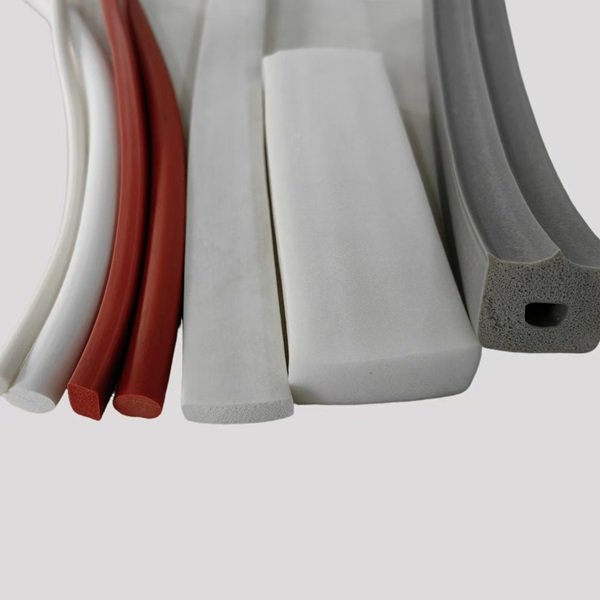
Silicone foam strips excel where thermal stability and high cleanliness standards are mandatory. Featuring low compression set (≤50% after 48 hours at 200°C), silicone retains its original elastic shape even under sustained heat and pressure. Key highlights include:
Extreme Temperature Tolerance: Maintains elasticity across temperatures from -60°C up to +300°C.
Hygienic & Food-Safe: Non-toxic, odor-free, and resistant to repeated high-pressure steam sterilization cycles at 200°C.
High Electrical Insulation: High dielectric strength makes it ideal for sensitive electronic enclosures and gas appliances.
Making the Right Choice for Your Equipment
Opt for EPDM foam strips when you need a cost-effective, weather-resistant, and water-repellent seal for outdoor machinery, building gaskets, and shock-absorbing blocks.
Choose silicone foam strips for high-temperature appliances, potable water systems, refrigeration equipment, lighting fixtures, or applications requiring food-grade hygiene and high electrical insulation.
EPDM Foam Strips
Silicone Foam Strips