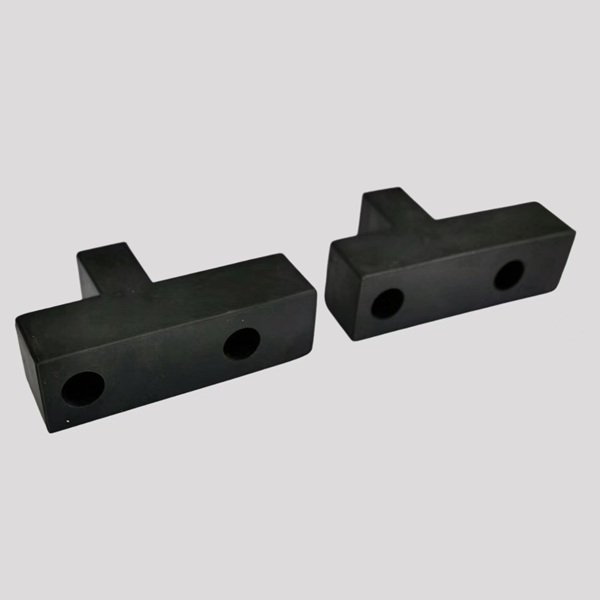
Item No. RDB-0016
Every mechanism that moves eventually hits a limit. A door swings to its stop, a suspension arm reaches full travel, a conveyor carriage meets its end position. How that limit is handled determines whether the machine runs quietly for years or develops cracks, noise, and loose fasteners within months.
A rubber buffer block is the part that handles it. Mounted at the limit point, it deforms under contact and absorbs the kinetic energy of the moving part, bringing it to rest without a hard impact. The rubber recovers after each cycle, ready for the next one. The result is smoother motion, less stress on the structure, and a significant reduction in noise. We mold these blocks in a range of compounds and hardness levels, with custom shapes and mounting options produced to your drawings or samples.
Compliant end stop – limits travel while absorbing impact energy
Elastomeric recovery – returns to shape after each compression cycle
Compound options – NBR, EPDM, natural rubber, silicone, neoprene, custom blends
Hardness tuned to the load – 40 to 90 Shore A, from soft cushioning to firm stopping
Shape flexibility – rectangular, cylindrical, square, and fully custom profiles
Bonded metal inserts – available for bolt-on mounting and stability under load
Compression set resistance – cushioning force stays consistent over time
Environmental resistance – grade-dependent resistance to oils, water, UV, and ozone
Temperature range options – from -40°C to +120°C, with high-temp grades available
Custom production – any size, hardness, color, or insert configuration
Converts Impact Into Controlled Deceleration – Instead of a sudden stop that stresses bolts and welds, the block deforms gradually and brings the moving part to rest smoothly.
No Metal-to-Metal Contact – The rubber surface eliminates the noise, wear, and galling that occur when hard parts strike each other directly.
Recovers for the Next Cycle – Elastomeric recovery means the block returns to its original shape after every compression, so performance stays consistent through millions of cycles.
Protects the Structure Around It – By absorbing energy at the limit point, the block reduces fatigue on frames, brackets, and fasteners throughout the assembly.
Industrial machinery – end stops, carriage limits, and impact cushions
Automotive – suspension bump stops, hood and door stops, panel buffers
Construction equipment – boom and arm travel limiters, cab mounts
Material handling – forklift stops, cart end buffers, conveyor carriage stops
Material
NR, SBR, EPDM, CR
Hardness
30-85 ShA
Metal
Zinc plated, stainless steel, Aluminum plate
Color
Black
Service
Customized logo is available
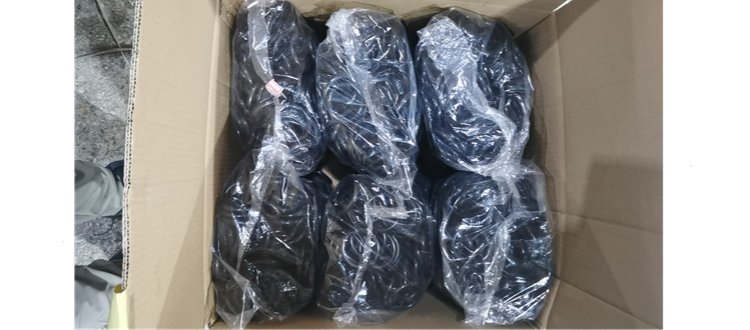
Standard: Goods are typically supplied in about 20-25kg/carton.
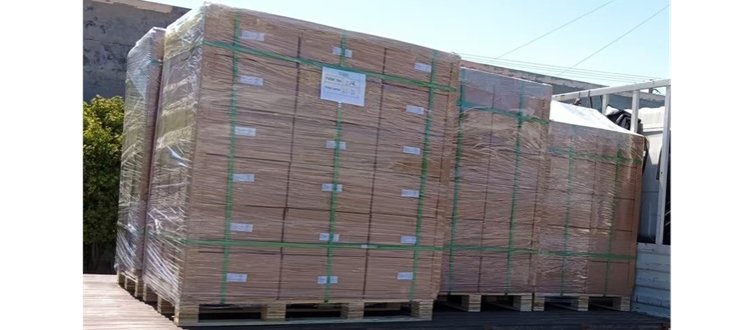
Standardized Pallets: Goods are stacked on heat-treated (ISPM 15) or plastic pallets, optimized for forklift handling. Rigid Corner Protectors: High-impact cardboard corner guards are applied to the full height of the stack. This prevents the straps from cutting into the rubber and maintains the vertical integrity of the pallet.
How do I know whether I need a soft or firm buffer block?
Soft blocks (40–60 Shore A) suit applications where gentle deceleration and noise reduction matter most. Firm blocks (70–90 Shore A) suit high loads and short travel limits. Tell us the moving mass and impact speed and we will recommend.
Can the block be used as a continuous vibration isolator, or only as an end stop?
Both. As an end stop it absorbs occasional impact. As a mount it isolates continuous vibration. The same block can serve either role depending on how it is positioned.
What is the maximum travel the block can absorb?
Travel depends on block thickness and hardness. Thicker, softer blocks allow more deflection. Share your available space and we will size it accordingly.
Do I need a metal insert?
Inserts are recommended where the block is bolted and must maintain its shape under load. For adhesive or captured mounting, inserts may not be required.
How does temperature affect performance?
Standard compounds perform from -40°C to +120°C. At extremes, hardness shifts slightly; silicone and FKM grades are available for wider temperature ranges.
Are these blocks resistant to oils and chemicals?
NBR handles oils and fuels well. EPDM is preferred for water and outdoor exposure. Consult us for specific chemical compatibility.
Can you produce custom shapes and sizes?
Yes. Any size, shape, hardness, and insert configuration can be produced to your drawing or sample.
If you have any questions or needs about the product, please fill in the following form and we wll contact you as soon as possible.
PHONE: +86 0532 8769 9025
EMAIL: sales@todorubber.com
Located in Jimo
Located in Xinhe


